
Panless Ultra-Small computer
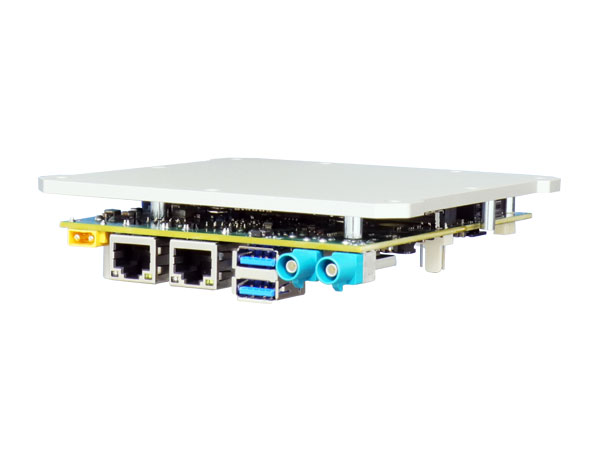
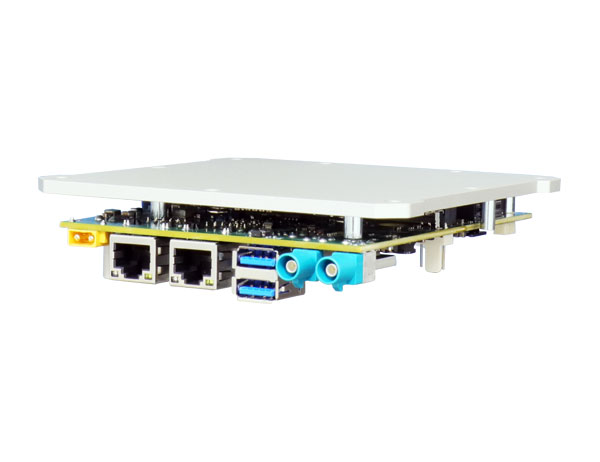
FLYC-300
• Up to 100 TOPS GPU by NVIDIA® Jetson Orin™ NX
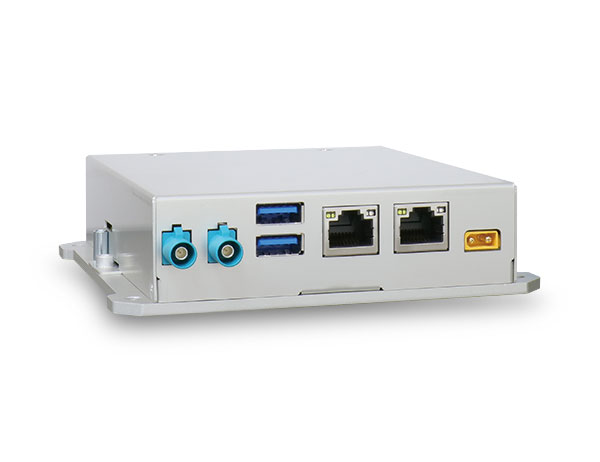
• Supports multiple camera and sensor interfaces
• 2x GbE and 2x USB3 for RGB/ Infrared/ hyperspectral cameras and lidar/ radar
• 2x GMSL2 for HDR/ 3D cameras
• Built-in UART and CAN to interact with flight controller
• 1x M.2 2230 for storage and 4G/5G communication ready
• Supports 4S-14S drone battery pack
• Compatible GMSL2 cameras with pre-built drivers
FLYC-300: Ultra-Compact AI Mission Computer for UAVs and UGVs
The FLYC-300 is an ultra-compact AI mission computer based on NVIDIA Jetson Orin NX, purpose-built for high-performance edge computing in drones (UAVs) and unmanned ground vehicles (UGVs). It enables real-time video analytics, object recognition, obstacle avoidance, and more.
Despite weighing only 297g, the FLYC-300 delivers up to 100 TOPS of AI performance and features a variety of high-speed interfaces including GMSL2, USB, CAN, and UART, making it capable of complex sensor fusion and communication control.
Ultra-Compact, Lightweight Form Factor
Designed for space-constrained aerial platforms, the FLYC-300 measures just 124 x 123 x 30.5 mm and weighs only 297g (or 345g including the enclosure), making it ideal for lightweight drones and mobile robotics systems.
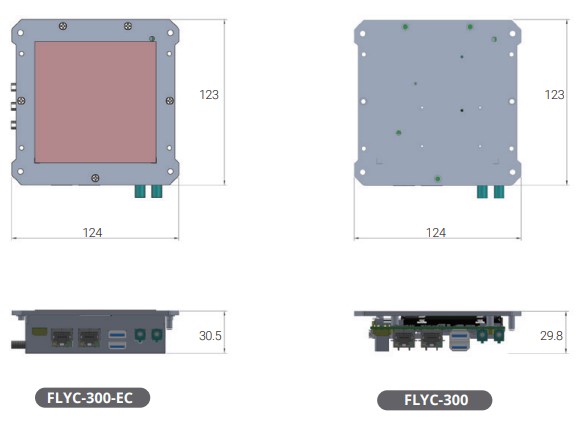
High-Efficiency Thermal Architecture
The system is built to operate reliably in high-temperature environments up to 70°C. It features a heatsink surface for direct thermal contact with aluminum enclosures and can optionally support an external cooling fan for enhanced thermal management.
Power Input and Battery Compatibility
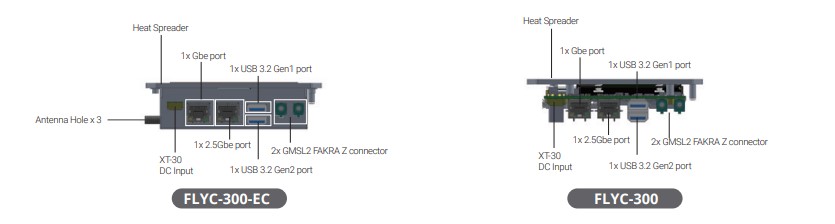
Supporting 12–60V DC input via XT-30 connector, the FLYC-300 can directly interface with 4S to 14S drone battery packs without the need for external power modules—simplifying drone system design and enhancing reliability.
Integrated High-Speed I/O Interfaces
• 2x GMSL2 (FAKRA Z): For HDR/3D camera integration
• 2x USB 3.2: Supports RGB, infrared, hyperspectral cameras, LiDAR, etc.
• CAN / UART / GPIO / I2C: For communication with flight controllers and sensors
• 1x GbE + 1x 2.5GbE: For real-time video streaming and network communication
5G/4G Wireless Communication Support
With an M.2 B key slot and micro SIM socket, the FLYC-300 supports direct installation of 5G or 4G cellular modules, enabling real-time remote transmission of imagery and sensor data—ideal for autonomous flights connected to the cloud.
Industrial-Grade Rugged Design
• Operating temperature: -25°C to 70°C
• Shock and vibration: MIL-STD-810H compliant
• EMC Certification: CE / FCC Class A
• Ruggedized design ensures field-proven durability and reliability
Application Scenarios
• Autonomous Drones: Obstacle detection, environmental monitoring, reconnaissance
• UGVs & Robot Dogs: Indoor/outdoor path planning, object tracking, remote video transmission
• Disaster Response Robots: Thermal imaging-based human detection
• Precision Agriculture: Pest and disease detection, crop analysis using hyperspectral imaging
• Industrial Facility Monitoring: Real-time inspection using GMSL2 cameras
FLYC-300 is the intelligent core of unmanned systems such as drones and UGVs. It goes beyond basic control to deliver perception and decision-making capabilities, making it the ideal choice for developers and organizations building autonomous unmanned platforms.
Small and light—but powerful and precise: FLYC-300.

About Us
CEO : Lee Yoohyung Register number : 417-88-00211(Pyungcheon AcroTower, Gwanyang-dong) A-dong 410-ho,
230, Simindae-Ro, Dongan-Gu, Anyang-Si, Gyeonggi-Do,
Republic of Korea.
Contact Us
(Closed at weekend & holidays)


